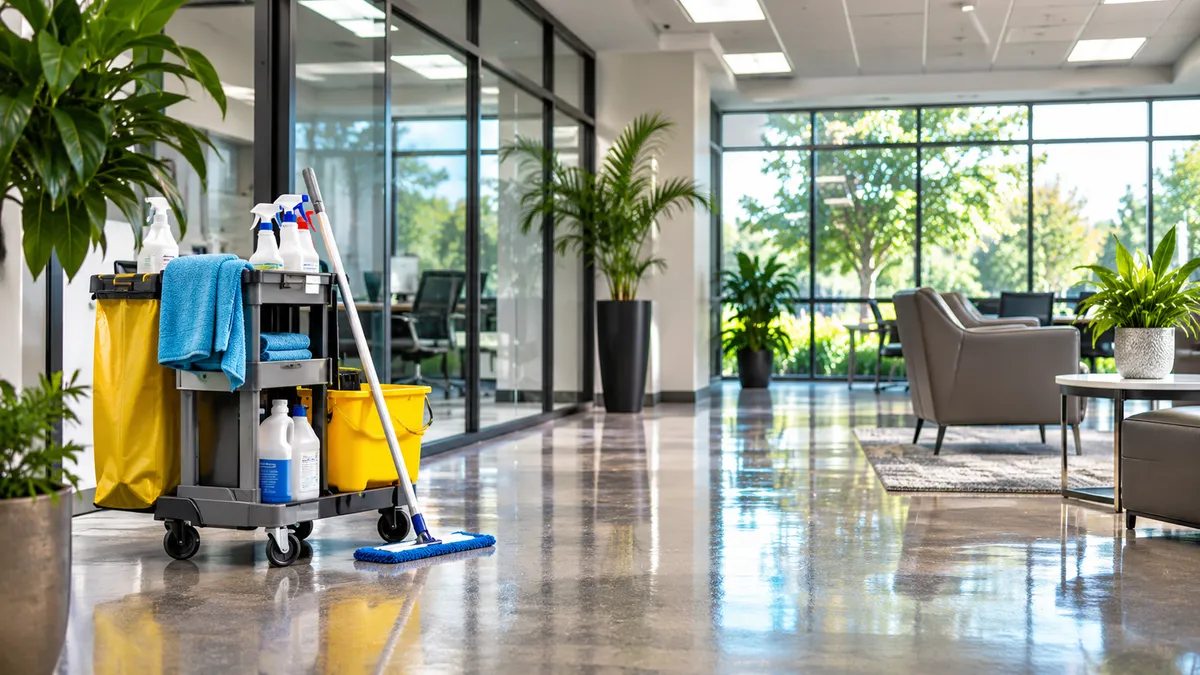
Commercial Deep Cleaning in Thunderbird Hills, TX: When Your Business Needs More Than Routine Cleaning
Keeping a commercial property clean involves more than emptying trash bins and wiping down frequently used surfaces. While routine janitorial services help maintain everyday cleanliness, certain areas need more detailed attention to address accumulated dirt, dust, and buildup.
For businesses in Thunderbird Hills, TX, commercial deep cleaning can help maintain a cleaner and more presentable environment for employees, customers, and visitors.
Whether you manage an office, professional workspace, or another commercial facility, understanding when to schedule a deeper cleaning can help you maintain your property more effectively.
What Is Commercial Deep Cleaning?
Commercial deep cleaning focuses on areas and surfaces that may not receive detailed attention during routine cleaning.
Regular janitorial services typically address recurring tasks such as general surface cleaning, trash removal, and maintaining commonly used areas. Deep cleaning goes further by addressing accumulated dirt and buildup in areas that may be overlooked during everyday maintenance.
Depending on the facility and agreed service scope, deep cleaning may include:
Detailed cleaning of floors and hard surfaces.
Cleaning baseboards and other frequently overlooked areas.
Removing accumulated dust from accessible surfaces.
Thorough cleaning of restrooms.
Detailed attention to break rooms and shared spaces.
Cleaning frequently touched surfaces.
Addressing buildup in corners and difficult-to-reach areas.
The exact tasks should be based on the property's condition, cleaning requirements, and the services included in the cleaning agreement.
1. Signs Your Business May Need Deep Cleaning
Even businesses with recurring cleaning schedules can develop areas that need additional attention.
Here are some signs that it may be time to consider commercial deep cleaning.
Visible Dirt and Buildup: Dust, grime, and residue may gradually accumulate around floors, corners, baseboards, and other surfaces.
Persistent Odors: Unpleasant smells in restrooms, break rooms, or other shared spaces may indicate that certain areas need more detailed cleaning.
Discolored Flooring: High-traffic areas can develop visible dirt buildup that routine maintenance may not fully address.
Dust in Overlooked Areas: Shelves, corners, furniture edges, and other less frequently cleaned spaces may collect dust over time.
Declining Overall Appearance: When a facility looks less presentable despite regular cleaning, a more thorough cleaning session may help address the accumulated buildup.
Identifying these signs can help business owners decide when additional cleaning attention is needed.
2. Give High-Traffic Areas Extra Attention
Some parts of a commercial property experience more daily activity than others.
Entrances, hallways, reception areas, and shared workspaces can collect dirt quickly because employees and visitors frequently move through them.
These spaces may benefit from more detailed cleaning to address:
Dirt tracked in from outside.
Marks and residue on flooring.
Dust along baseboards and corners.
Fingerprints on frequently touched surfaces.
Buildup around furniture and fixtures.
Paying attention to high-traffic areas helps maintain a more consistent appearance throughout the property.
3. Don't Overlook Restrooms and Break Rooms
Restrooms and employee break rooms require consistent cleaning because they are used regularly throughout the workday.
Although these spaces may already be included in a routine janitorial schedule, periodic deep cleaning can provide additional attention to areas where dirt and residue accumulate.
Depending on the facility's needs, cleaning may include:
Restrooms: Detailed attention to sinks, fixtures, floors, partitions, and frequently touched surfaces.
Break Rooms: Cleaning counters, tables, sinks, and other shared surfaces.
Common Areas: Addressing dirt and dust around furniture, corners, and frequently used spaces.
A well-maintained shared environment supports a more comfortable experience for employees and visitors.
4. Understand the Difference Between Routine Cleaning and Deep Cleaning
Both routine cleaning and deep cleaning play important roles in commercial property maintenance, but they serve different purposes.
Routine Cleaning | Deep Cleaning |
Focuses on recurring maintenance tasks | Focuses on more detailed cleaning |
Helps maintain everyday cleanliness | Addresses accumulated dirt and buildup |
Usually follows a regular schedule | Can be scheduled periodically or as needed |
Covers frequently used surfaces and spaces | Includes additional attention to overlooked areas |
Helps keep facilities presentable | Helps refresh areas that need more thorough attention |
A deep cleaning service does not necessarily replace routine janitorial maintenance. The two approaches can work together as part of a comprehensive cleaning plan.
5. How Often Should a Commercial Property Be Deep Cleaned?
There is no universal schedule for every business. The appropriate frequency depends on several factors.
Consider:
The size of the facility.
The number of employees and visitors.
Daily foot traffic.
The type of business operations.
The condition of floors and shared spaces.
Existing janitorial services.
Specific cleaning requirements.
A busy commercial property may require more frequent detailed cleaning than a smaller office with limited daily traffic.
Evaluating the facility regularly can help determine when additional cleaning is appropriate.
6. Prepare Your Business Before a Deep Cleaning Service
A little preparation can help make a commercial deep cleaning appointment more organized.
Before the scheduled service, consider:
Removing personal belongings from work surfaces.
Securing confidential documents and sensitive materials.
Informing employees about the cleaning schedule.
Identifying areas that need special attention.
Discussing access to restricted rooms.
Communicating any specific cleaning concerns.
Providing clear instructions helps the cleaning team understand your priorities and the areas included in the agreed scope of work.
7. Combine Deep Cleaning With Regular Janitorial Maintenance
One deep cleaning appointment may improve the condition of a commercial property, but ongoing maintenance is important for keeping it presentable.
A practical cleaning strategy can combine recurring janitorial services with periodic detailed cleaning.
For example:
Schedule regular cleaning for frequently used spaces.
Monitor restrooms and break rooms for additional cleaning needs.
Pay attention to high-traffic flooring.
Arrange deeper cleaning when visible buildup develops.
Review the cleaning schedule as business activity changes.
This approach helps businesses maintain consistency while addressing areas that require more attention from time to time.
Keep Your Commercial Property Clean With SA Gold Standard Cleaning
A clean business environment contributes to the overall impression your property makes on employees, customers, and visitors.
While routine cleaning helps maintain everyday conditions, commercial deep cleaning provides an opportunity to address accumulated dirt and areas that may need additional attention.
SA Gold Standard Cleaning provides commercial cleaning services for businesses in the San Antonio area, including Thunderbird Hills, TX.
If your facility needs more than its usual cleaning routine, consider discussing a commercial deep cleaning service that fits your property's requirements.
Request Commercial Deep Cleaning in Thunderbird Hills, TX
Don't wait until accumulated dirt and buildup affect the appearance of your commercial space.
Whether you manage an office or another commercial facility, a cleaning plan that combines regular maintenance and periodic deep cleaning can help keep your property looking its best.
Contact SA Gold Standard Cleaning to discuss commercial deep cleaning services in Thunderbird Hills, TX.
